

Business plans change. A second location underperforms, a partner leaves, or a concept outgrows its space. If you are in the middle of a retail lease in Omaha and need a way out, you may hear two terms: subleasing and assignment. They sound similar, but they work differently, and neither is as simple as finding someone to take the space.
This is a general overview of what Omaha retail tenants should understand before they start. Every lease is different, and a real estate attorney should review yours before you take any step.
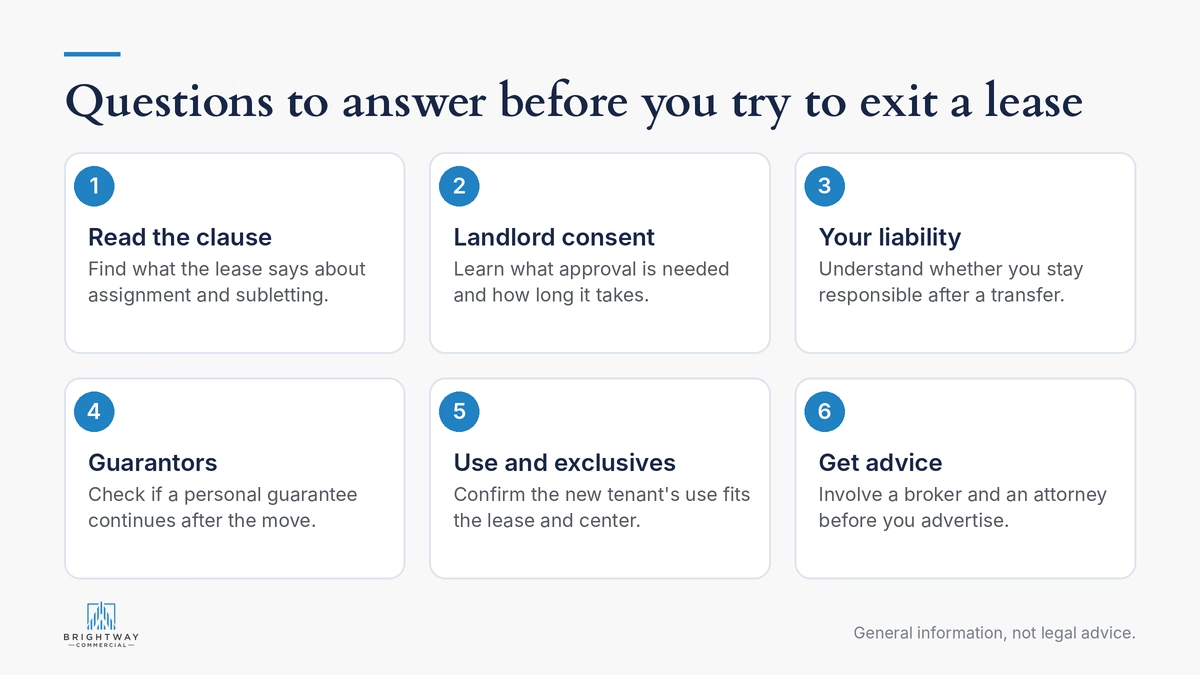
Sublease versus assignment
In a sublease, you stay the tenant under your lease and rent all or part of the space to a second party. You remain responsible to the landlord for rent and every other obligation, even if the subtenant stops paying. In an assignment, you transfer your interest in the lease to a new tenant. Depending on the lease and any agreement with the landlord, you may or may not be released from future obligations.
That difference matters most. Many tenants assume an assignment ends their responsibility, but in many leases it does not unless the landlord agrees in writing to release you.
Start with what your lease says
Most retail leases include a clause on assignment and subletting, and many require the landlord’s written consent. Some say consent cannot be unreasonably withheld. Others give the landlord broad discretion. Some leases also give the landlord the right to recapture the space, which means ending the lease instead of approving a transfer. Read this clause closely before you tell anyone you want to leave. If you are still at the stage of negotiating a lease, these terms are worth raising early, as we cover in what to check before you sign a retail lease in Omaha.
What landlords tend to look at
When a landlord reviews a proposed transfer, the questions are usually about risk to the property and the income it produces. Common points include:
- The financial strength and operating history of the new tenant.
- Whether the new tenant’s use fits the lease, the center and any exclusives held by other tenants.
- Whether the transfer changes parking, signage, hours or traffic in ways the landlord or neighbors care about.
- Whether you or a guarantor will stay on the hook after the transfer.
- Any fees or lease changes the landlord wants as a condition of consent.
A landlord may also ask for a new or reaffirmed guarantee. If someone personally guaranteed your lease, find out in advance how a transfer affects that guarantee.
Do not skip the practical questions
Even with a clear clause, several practical issues can slow things down or stop a deal. A new tenant may need the same permits or licenses for their business, and the City of Omaha has its own requirements depending on the use. Franchise concepts may also need approval from the franchisor, and a replacement franchisee has to meet those standards too. Finding a qualified replacement takes time, and the landlord’s review adds more, so it is wise to start before you are in a financial bind.
Think about timing and alternatives
Transferring a lease is only one possible path. Depending on your situation, you might negotiate an early termination with the landlord, wait for a renewal or expiration date, or relocate within the same landlord’s portfolio. We discuss the timing side of that decision in lease renewals and options in Omaha. Each path has costs and trade-offs, and the right one depends on your lease terms, your business and the property.
Where a broker and attorney fit
A broker who understands retail leasing can help you reach qualified replacement tenants and talk with the landlord about what they will accept. An attorney reviews the legal language and tells you what you remain liable for. A broker is not a substitute for legal advice, and the two roles work best together. Our tenant representation work often involves this kind of lease question, and our landlord representation experience helps us understand how landlords view a transfer request.
Talk it through before you act
If you are considering leaving a retail space in Omaha, or you own a building and have received a transfer request, Nate Ohlrich, CCIM, Principal Broker at Brightway Commercial, is glad to talk through your situation. Reach out here to set up a call or a meeting.
This article is general information, not legal advice. Have a real estate attorney review your lease before you act on any of it.
Leave a Reply