

Many Omaha business owners reach a point where paying rent starts to feel like paying someone else’s mortgage. Buying a building can be a sound move, but it is a very different commitment from signing a lease. It ties up capital, adds responsibilities, and changes how you think about your business and your real estate.
This is a general overview of the questions worth working through before you buy. Every situation is different, and your attorney, lender and tax advisor should be involved before you commit to anything.
Owner-user or investor: two different purchases
An owner-user buys a building to operate their own business in it. An investor buys a building to lease to others and earn income from it. Some buyers do both, occupying part of a building and leasing the rest. The two roles look similar on paper, but they are judged differently.
An owner-user is mostly buying a location and control over their space. The building has to work for the business first. An investor is mostly buying an income stream, so the quality of the tenants, the lease terms and the condition of the property drive the decision. Knowing which role you are taking on shapes everything that follows, from financing to what you should look for.
What owning really involves
Leasing keeps many costs and decisions with the landlord. Owning moves them to you. That is a real advantage for some businesses and a real burden for others.
- Capital: a purchase usually requires a meaningful down payment, closing costs and funds held back for repairs, which can compete with money you would otherwise put into the business.
- Building responsibility: roof, parking lot, HVAC, structure, taxes and insurance become your line items, and major repairs rarely arrive on a convenient schedule.
- Flexibility: if your business outgrows the space or needs to move, you now have a building to sell or lease, which can take time.
- Time and attention: managing a property, and any tenants in it, takes effort that comes out of running your business.
None of this means buying is the wrong choice. It means the decision deserves the same care you would give any major business investment.
Questions to work through before you buy
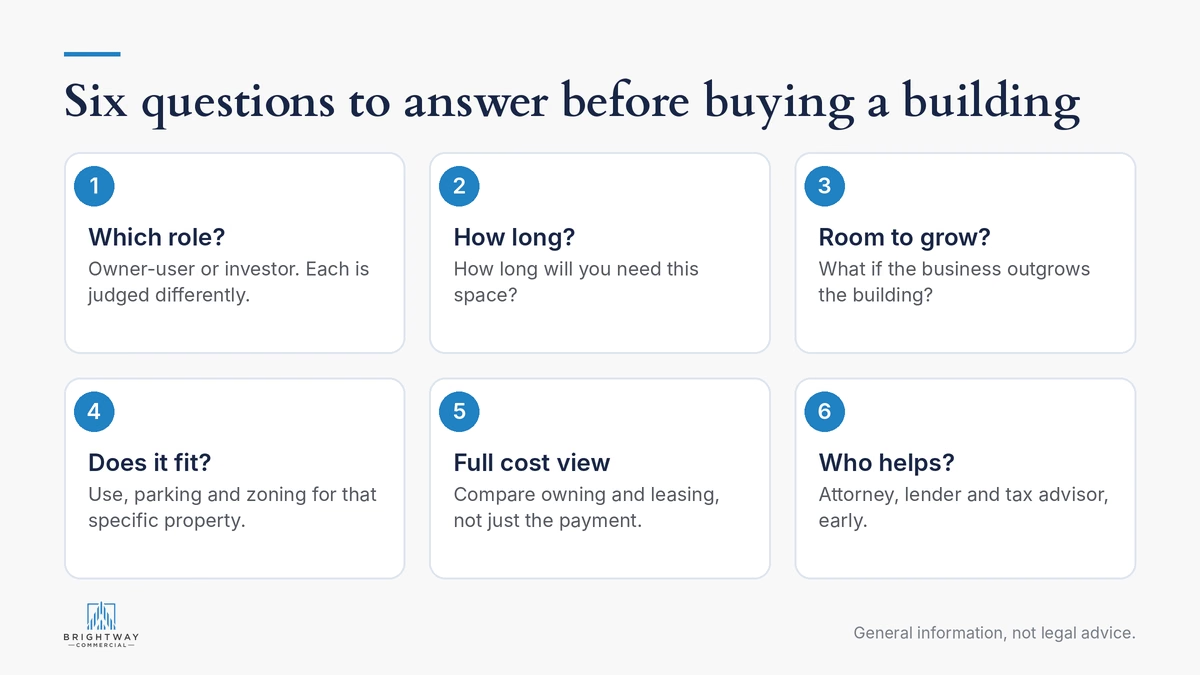
A few questions help clarify whether a purchase fits. How long do you expect to need this space? Could your business realistically outgrow it, and what would you do then? Does the building suit your use today, including parking, access, zoning and permitted uses for that specific property in Omaha? If part of the building will be leased to others, who will manage those tenants and handle their requests?
It also helps to compare the full picture of owning against the full picture of leasing, not just the monthly payment. Taxes, insurance, maintenance, financing terms and what the capital could do elsewhere in your business all belong in that comparison. Your lender and tax advisor can speak to the numbers that apply to you.
If you plan to lease part of the building
Buyers who plan to lease space to other tenants are stepping into the landlord’s role. That means setting lease terms, handling NNN charges, planning for renewals and vacancies, and responding to tenant requests. Our article on lease renewals and options in Omaha shows how these decisions look from the tenant’s side, and it is useful to understand before you sit on the other side of the table. If you hold or plan to hold property that you lease out, see how landlord representation works.
Looking at it from the lease side
Before buying, it is worth knowing what your current lease already gives you. Renewal options, a tenant improvement allowance or room to expand may change the comparison. Our guide to tenant improvement allowances in Omaha covers one piece of that. If you decide to keep leasing for now, tenant representation can help you negotiate terms that protect your flexibility.
Bring the right people in early
A purchase involves more moving parts than most lease deals: due diligence on the property, environmental and physical inspections, title and survey review, financing, and a purchase agreement with deadlines that matter. A real estate attorney, a lender and a tax advisor each cover something a broker does not, and a broker can help coordinate the process around them. Bringing them in early tends to prevent surprises late in the deal.
Talk it through before you decide
If you are seriously weighing whether to buy a building in the Omaha area or keep leasing, Nate Ohlrich, CCIM, Principal Broker at Brightway Commercial, is glad to talk through your situation. Reach out here to set up a call or a meeting.
This article is general information, not legal, tax or financial advice. Consult a real estate attorney, lender and tax advisor before buying commercial property.
Leave a Reply