

Selling a retail building is a different kind of decision from selling a home. The building is usually a business asset with tenants, leases, taxes and a loan attached, and each of those affects who will buy it and how a sale unfolds. If you own a retail property in Omaha and are starting to wonder about selling, a little thinking up front makes the first conversation with a broker far more useful.
This is a general overview of what an owner should consider. Every property and every owner is different, and the right answers depend on your goals.
Start with your reason and your timeline
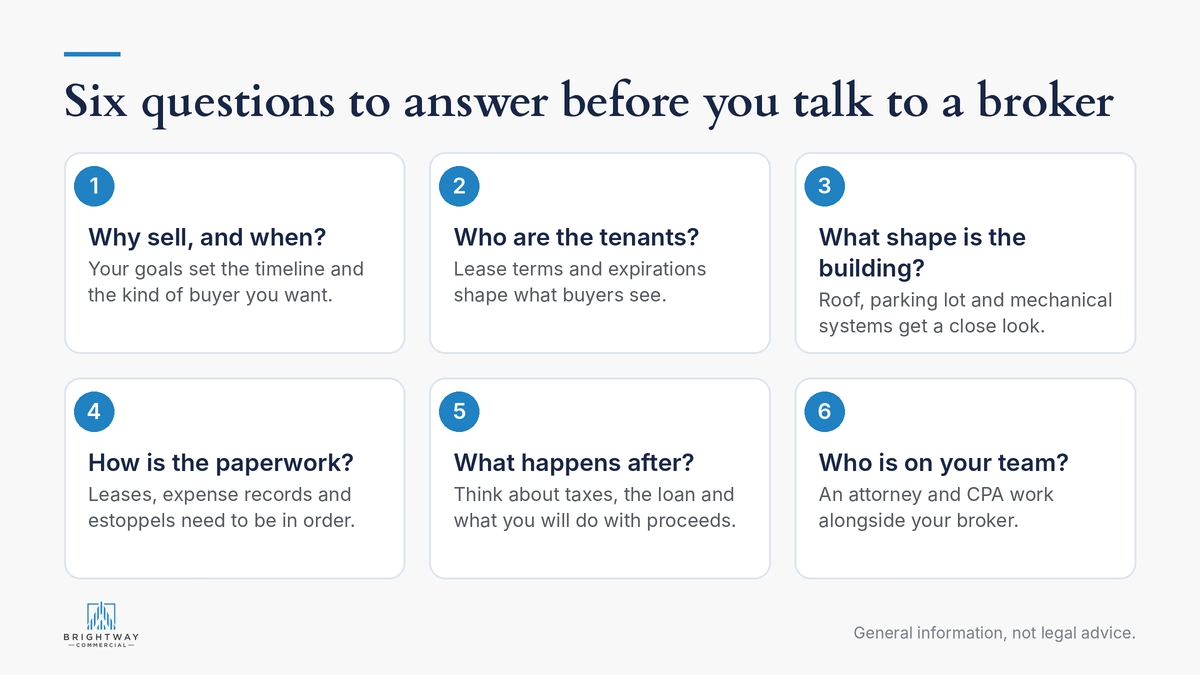
Why you want to sell shapes almost everything else. An owner retiring from a long hold, an owner who wants to reinvest in another property, and an owner who needs to settle an estate may all want different things. Some care most about timing. Others care about a particular outcome, such as keeping a good relationship with a long-time tenant. Be clear with yourself about which matters most, because the process involves trade-offs and rarely delivers every goal at once.
Know your tenants and your leases
For a building with tenants, the leases are a major part of what a buyer is evaluating. Buyers look closely at who the tenants are, how long each lease has left, whether there are renewal options, and how expenses are passed through. Before you talk to anyone, gather the leases and any amendments, and make a plain list of key dates. If you are not sure how your leases treat NNN charges, our article on what to check before you sign a retail lease in Omaha explains the terms from the tenant side, which helps you see what a buyer will be reading.
Also think about vacancy. If part of the building is empty, or a lease is close to expiring, a buyer will notice. A broker can talk through how that might be handled, but it is better to know the situation before the conversation starts.
Take an honest look at the building
Buyers and their inspectors will look at the roof, the parking lot, HVAC and other major systems, and any deferred maintenance. Surprises that come up late in a sale can slow things down or change the terms. It helps to know what repairs have been done, what is outstanding, and what records you have, such as permits, warranties and service history.
Organize the paperwork
A sale involves a lot of documentation. Typical items include:
- Current leases, amendments and tenant contact information
- Recent operating statements and records of tax, insurance and maintenance expenses
- Information on any existing loan, including prepayment terms
- Surveys, title information and any environmental reports you already have
- Service contracts and warranties that would transfer to a buyer
Not everything will exist for every property, and a broker or attorney can help you work out what is needed. Having records in order generally makes the process smoother for everyone involved.
Think about what happens after the sale
The sale is not the end of the financial picture. Your existing loan, the tax consequences of selling, and what you plan to do with the proceeds can all affect your decision and your timing. These are questions for your CPA and attorney, and it is wise to involve them before you commit to a plan, not after.
Selling takes a team
Selling a commercial building is not a simple do-it-yourself project. It involves marketing to the right buyers, handling inquiries, negotiating price and terms, managing due diligence, and coordinating lenders, attorneys and title work, all while you keep running the property. A commercial broker, an attorney and a CPA each play a different role. If you are also thinking about how leasing decisions affect a sale, our piece on what a tenant rep does in a commercial lease negotiation shows how the tenant side of the table thinks.
You can learn more about the people behind Brightway Commercial on our about page.
Talk it through when you are ready
If you own a retail building in Omaha and are seriously considering a sale, Nate Ohlrich, CCIM, Principal Broker at Brightway Commercial, is glad to talk through your situation with you. Reach out here to set up a call or a meeting.
This article is general information, not legal advice. Talk with a real estate attorney and a tax professional before making decisions about selling a property.
Leave a Reply