

Most retail spaces in Omaha need some work before a new business can open. Walls move, floors change, plumbing and electrical get adjusted, and the storefront has to match the brand. A tenant improvement allowance, usually called a TI allowance, is one way a lease can address who pays for that work. It sounds simple, but the details in the lease decide whether it actually helps you.
This is a general overview for business owners who are comparing spaces or reviewing a lease. Every deal is different, and a real estate attorney should review any lease before you sign it.
What a TI allowance is
A TI allowance is an amount the landlord agrees to put toward building out the space for your use. Whether a landlord offers one, and how much, depends on the property, the condition of the space, the length of the lease and the strength of the tenant. Some spaces are leased as is, with no allowance at all. Others come with a contribution, and some are delivered as a finished second generation space that needs very little work.
It is rarely free money
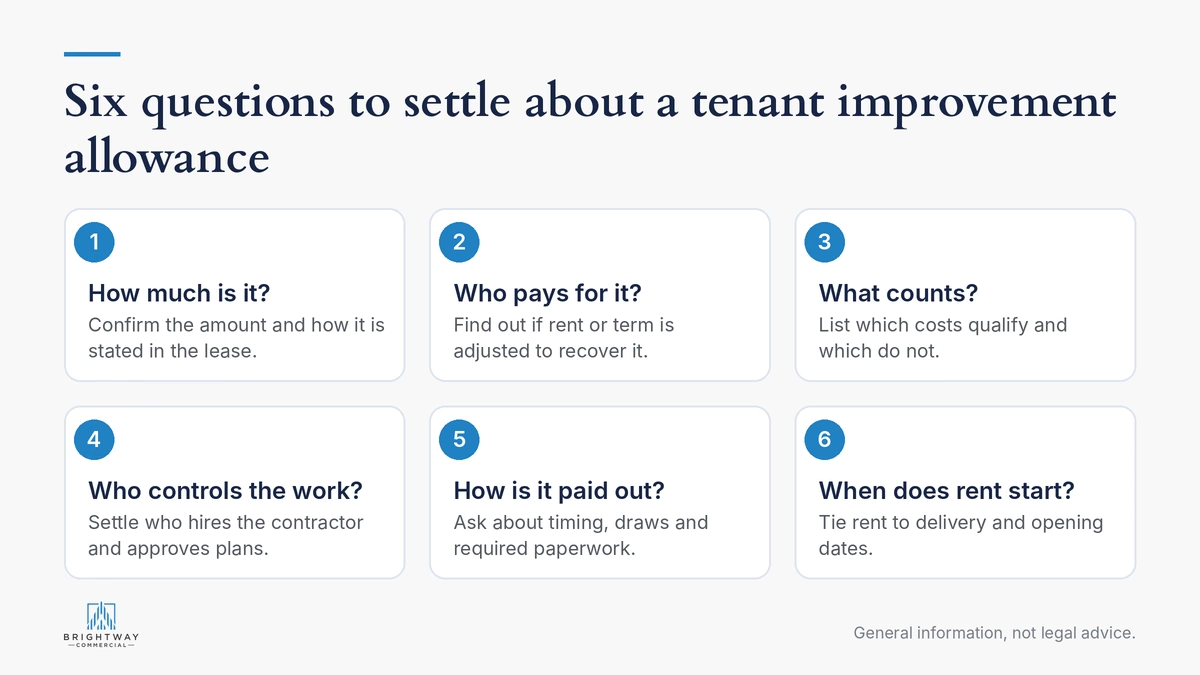
Landlords are not giving away dollars. An allowance is usually part of the overall economics of the deal. It may be paid for through higher base rent, a longer term, or both. When you compare two spaces, look at the allowance together with rent, term and charges, not on its own. A space with a smaller allowance and a lower rent can be the better deal, and the reverse can be true as well.
Also read how the lease treats any unused allowance. In some leases the leftover amount is lost. In others it can be applied to rent or to certain costs. That one clause can change the value of the allowance to you.
What the lease should spell out
- The amount of the allowance, and whether it is stated as a total or per square foot.
- Which costs qualify, such as construction, design, permits and fees, and which do not, such as furniture, inventory, equipment or signage.
- Whether the landlord pays contractors directly, reimburses you after the work is done, or pays in stages.
- What paperwork the landlord requires before paying, such as lien waivers, invoices, plans and a certificate of occupancy.
- A deadline to use the allowance, and what happens if the work is finished late.
Reimbursement is where many tenants are surprised. If the landlord pays only after the space is finished and inspected, you may need to fund the construction first, which affects your cash planning. Ask early how and when the money actually arrives.
Who controls the build-out
The lease should say who hires the contractor, who approves the plans, and who manages the schedule. Landlords often have approval rights over plans and sometimes over which contractors can work in the building. Those rights can add time, so build them into your timeline. If something goes wrong with the work, you want to know in advance who is responsible for fixing it.
Timing, rent start and opening day
The most important question for many retailers is when rent begins. Look for language that ties your rent start date to the date the space is delivered and to a realistic construction period, not to a date that passes while you are waiting on permits or approvals. Before you commit to a space, confirm that your intended use is workable for that property with the City of Omaha or the municipality where it is located, including permits for the work you plan to do. Franchise concepts should also confirm that the franchisor has approved the plans.
How this connects to the rest of the lease
A TI allowance does not stand alone. It interacts with the lease term, renewal rights, charges and what happens to the improvements when the lease ends. For a broader checklist, read what to check before you sign a retail lease in Omaha. Because allowances often come with a longer commitment, it is also worth understanding how lease renewals and options work before you agree to a term.
Why representation helps
Landlords and their brokers negotiate these terms regularly. Most businesses do it once every few years. A tenant representative works for you, compares your options and helps negotiate the business terms, while your attorney reviews the legal language. Our tenant representation work covers this stage for retail and franchise tenants. A broker is not a substitute for an attorney, and a good outcome usually takes both.
Talk it through before you sign
If you are actively considering a space in Omaha, or you already have a lease or letter of intent in front of you, Nate Ohlrich, CCIM, Principal Broker at Brightway Commercial, is glad to talk through your situation. Reach out here to set up a call or a meeting.
This article is general information, not legal advice. Have a real estate attorney review any lease before you sign it.
Leave a Reply