

A retail space can look right in every way, with good visibility, the right size and parking out front, and still not be ready for your business. Whether your use is allowed there, what work needs a permit and what has to be approved before you open are separate questions from whether the space is available.
This is a general overview for business owners looking at retail space in the Omaha area. Requirements depend on the property, the use and the jurisdiction, so confirm the details for your specific address before you commit.
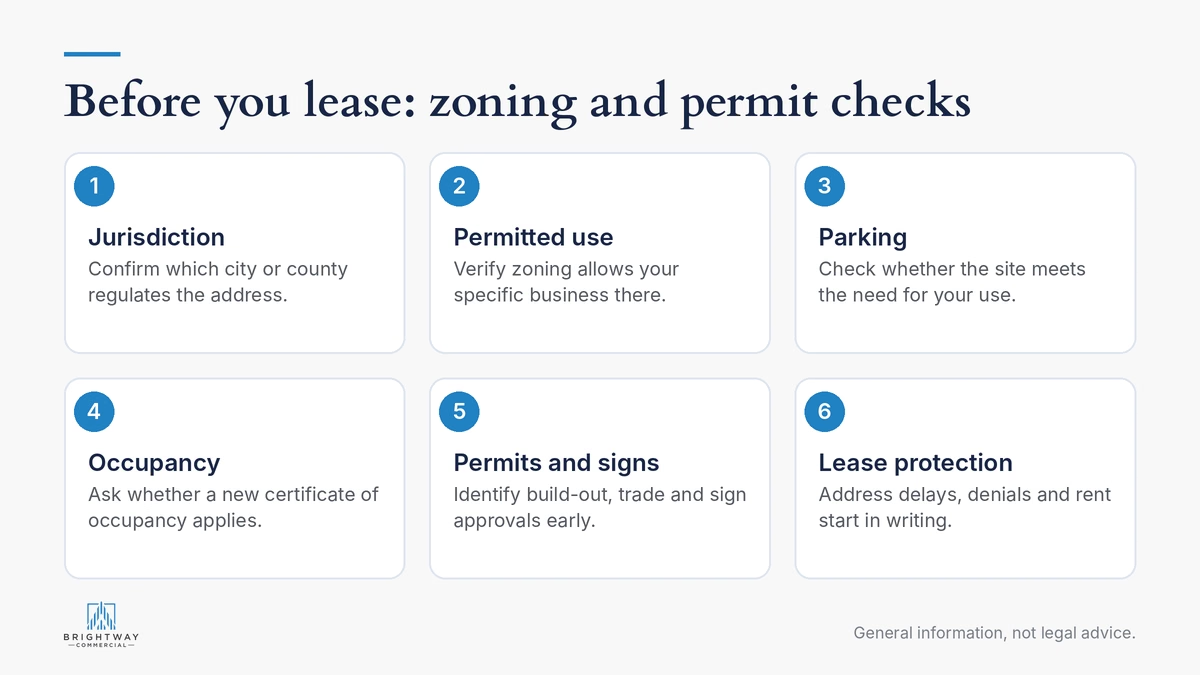
Start with the address and the jurisdiction
A mailing address that says Omaha does not always mean the property is regulated by the City of Omaha. Some locations in the metro fall under another city or the county, each with its own zoning rules and permit process. Confirm which one applies before relying on anything you have been told about what is allowed.
Check that your use is allowed
Zoning controls what kinds of businesses can operate on a property. The fact that a similar business is nearby, or that the previous tenant was a retailer, does not settle whether your use is permitted. Restaurants, drive-through concepts, fitness studios, medical and personal service uses, child care and businesses serving alcohol can be treated differently from general retail.
Ask these questions early:
- What is the property zoned, and are there overlay districts or site specific conditions?
- Is your use permitted outright, permitted only with an additional approval, or not allowed?
- Does your use change the parking requirement, and can the site meet it?
- Are there private restrictions, such as recorded covenants or another tenant’s exclusive, that limit your use even if zoning allows it?
Approvals that require public review take time and are not guaranteed. Your opening plan should account for that.
Certificate of occupancy
A certificate of occupancy relates to whether a building or space is approved to be occupied. In the City of Omaha, applications are submitted online to the Planning Department, and submitting one schedules a final inspection. Earlier inspections and approvals are expected to be complete first. Ask early whether your space and use will need a new certificate, especially if the use is changing from what was there before.
Build-out, signs and other approvals
Interior work often needs a building permit and may need separate electrical, plumbing or mechanical permits. A change of use can also bring building code or accessibility upgrades that were not obvious during a tour. An architect or contractor can help identify these before you finalize your budget and schedule.
Exterior signs generally have their own approval, and the shopping center may have sign criteria on top of the local rules. Food, alcohol and some personal services can require health or licensing approvals that run on separate timelines. If the work will be funded partly by the landlord, our article on tenant improvement allowances in Omaha explains what to sort out.
Protect yourself in the lease
Permits and zoning are not only a city matter. The lease decides who carries the risk if an approval is delayed or denied. Points to raise before signing include:
- A contingency that lets you end the lease if required approvals cannot be obtained
- Who applies for each permit and who pays for required upgrades
- Whether rent starts on a fixed date or only after permits are issued and you can open
- What the landlord represents about zoning, building condition and prior use
Many leases place much of this responsibility on the tenant unless it is negotiated otherwise. See what to check before you sign a retail lease in Omaha for related terms.
Build the timeline backward
Start from the date you want to open and work back through plan preparation, permit review, construction, inspections and any licensing. Franchise owners should also factor in franchisor approval of the site and plans. Leaving these questions until after signing can mean paying for a space you cannot yet use.
A tenant representative can help you raise these issues while you still have room to negotiate, working alongside your attorney, architect and contractor.
Talk it through before you sign
If you are actively considering retail space in the Omaha area, Nate Ohlrich, CCIM, Principal Broker at Brightway Commercial, is glad to talk through your situation. Reach out here to set up a call or a meeting.
This article is general information, not legal advice. Confirm zoning and permit requirements with the appropriate local office and have a real estate attorney review any lease before you sign it.
Leave a Reply